
DfE announces next phase of childcare rollout
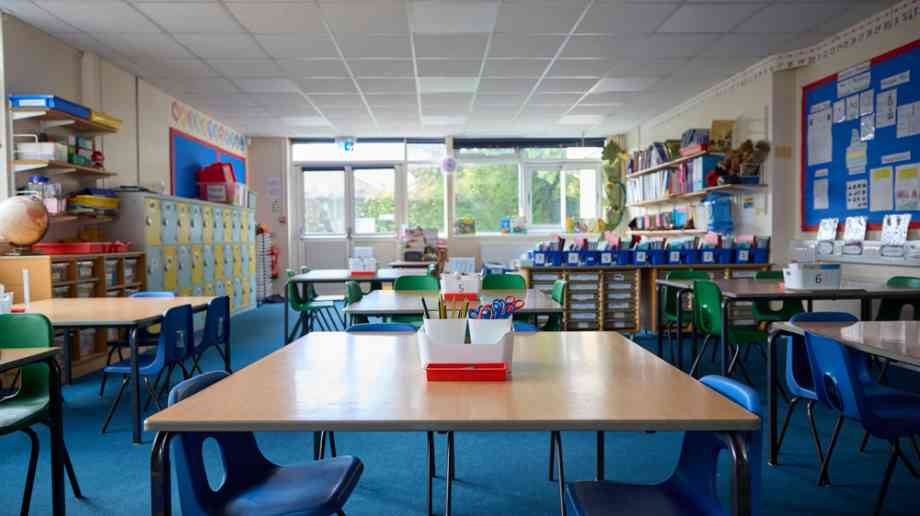
The Department for Education (DFE) has announced a pilot plan to launch in summer that will explore how unused spaces in schools could be adopted as childcare settings.
The government has dubbed the childcare rollout the "largest ever expansion of childcare in England's history."
A £1,000 cash incentives for new joiners has been piloted in some areas, as many nurseries struggle to recruit and retain staff.
Education secretary Gillian Keegan said the government is "transforming childcare" to deliver the support parents deserve.
She said that childcare expansion on this scale is "unprecedented" in this country.
"We will continue providing maximum support to nurseries and all providers to make it a reality," she added.
Since the start of April, they have offered eligible working parents of two-year-olds 15 hours of government-funded childcare.
The Department for Education (DFE) said that the latest data, set to be published on Monday, will reveal that 195,355 two-year-olds are already benefitting from government-funded places.
They said this puts the rollout on the same trajectory as the previous expansion of free childcare hours to three- and four-year-olds in 2017.
They estimate that about 40,000 more staff will have to be hired by September 2025, and 85,000 more free childcare places will be needed.
However, there has been criticism that the rollout is too ambitious. Zoe Raven, founder of Acorn Early Years Foundation, told the BBC: "Qualified practitioners are in very short supply and it can take 18 months to train up new practitioners."
Read moreLatest News

13/03/2026 - 09:30
An extra £40.5 million of funding has been allocated to support essential capital repairs and maintenance across schools, colleges and universities in Wales.

12/03/2026 - 10:03
Education Business LIVE 2026 will feature a session from NASBTT on how teacher training programmes can build trainees’ knowledge, attitudes and essential soft skills.

12/03/2026 - 09:48
An Ofsted report finds the challenges schools face in supporting children in care are mainly due to inconsistencies in local authority practice, unclear national expectations, and a lack of training for staff.

11/03/2026 - 14:00
The new measures will help universities meet their Prevent Duty, while the Office for Students will strengthen how it monitors whether universities are meeting Prevent responsibilities.

11/03/2026 - 10:03
Education, finance and digital V Levels will be the first subjects introduced as part of the government's post-16 education changes.