
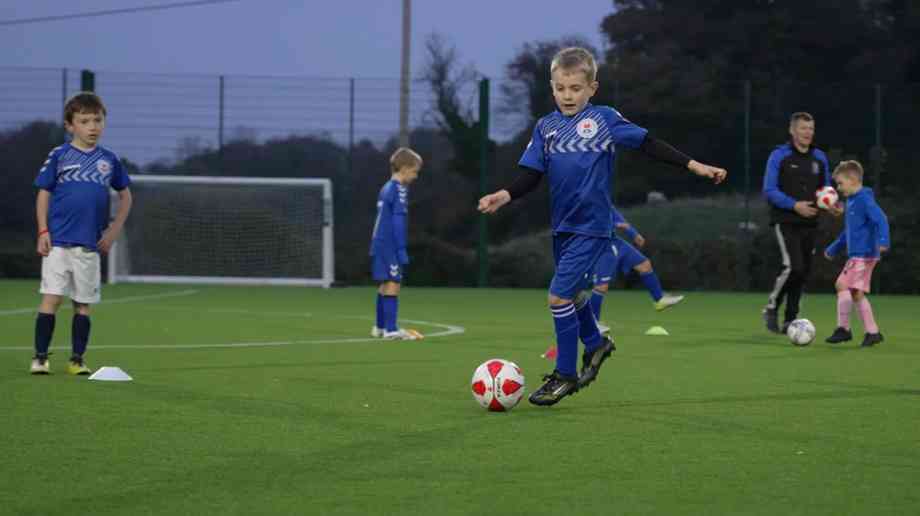
Maintaining artificial pitches in schools
Artificial sports surfaces are often misunderstood and misnamed. Richard Shaw, chief executive of the Sports and Play Construction Association, explains the key differences between surface types and outlines why a proactive, well-planned maintenance regime is essential to protect performance, safety and long-term investment
When speaking to people about artificial sports surfaces, the one thing you’ll quickly realise is how many different names people have for them. Here at the Sports and Play Construction Association (SAPCA) we have probably heard them all.
To avoid confusion, here’s a quick lowdown of what all those terms really mean.
Astroturf is a brand name that is a common catch-all for mainly 2G surfaces, but often, erroneously, used to describe any artificial grass (similar to Hoover becoming synonymous with vacuum cleaners). AstroTurf – an American company – was one of the original innovators of artificial turf in the 60s and 70s and was named after Houston Astrodome where it was installed and came to prominence.
1G surfaces are dense, non-filled or water filled surfaces usually used for cricket or hockey, especially at the elite end of the game.
2G surfaces are sand-filled or sand-dressed surfaces of an artificial turf below 25mm height.
They use silica rounded sand of a good size to ensure the sand doesn’t block the carpet for drainage. Often used for tennis and hockey.
3G surfaces are longer pile carpets with a combination of sand and infill material within them. Mainly used for football and rugby, the infill has traditionally been made of granulated end-of-life tires, but a wide range of organic materials are now being used – including cork, olive pits and engineered wood products.
4G surfaces, meanwhile, are the latest evolution of surfaces, which have only emerged in the past decade – and are still being developed. Similar to 3G surfaces, but with a denser fibre which means there isn’t a need for an infill.
And 5G surface? That will be your phone, rather than your pitch – none exist!
The above is a great starting point, as the first part of any good maintenance regime is knowing exactly the type of surface you have.
For all of the surface types listed above, maintenance is essential to keep them safe, performing well and to ensure the longest life possible from the surface. Thanks to the UK climate, very few things that are left out to the elements are maintenance free. Sports surfaces are no different and – adding to the heavy usage that schools often see on their pitches – a well-planned maintenance schedule is paramount to ensuring the pitches longevity (and return on investment).
Getting started
The time to start planning a maintenance schedule is the day the facility is handed over from contractors. Waiting for signs of wear and tear to appear will result in a potentially high cost of repairing – or even replacing – a surface.
When handing over the pitch, contractors should provide you with all the information regarding the type of pitch and what is needed to help plan the maintenance. Always make sure you know where the “paperwork” – increasingly in digital form these days – regarding your pitch is and where it can be accessed. The information will give guidance on the best way of maintaining the pitch and the advice should always be followed. The artificial turf industry is constantly innovating with pitches and infill materials and each pitch system is slightly different, so a maintenance regime that works well for one facility might not do so for another.
We would always recommend using a SAPCA-accredited maintenance provider. Each SAPCA member company has been thoroughly vetted, not just for the quality of its work, but also for the company’s professionalism, its financial position and reputation within industry. References and site visits allow us to be certain that those who obtain and hold the SAPCA badge deserve it – and should give you, the customer, confidence in their ability to deliver.
A list of SAPCA members is listed on the SAPCA website, along with advice and technical details of sports and play construction which we make freely available to ensure that everybody can access high quality advice. If you feel that information is missing or you need additional guidance, simply get in contact with us. We exist to help facility owners with advice and support them in finding the right people for the job!
Ensuring longevity
A maintenance contractor’s primary focus is to keep the surface clean, level and of a consistent texture, so that ball roll and footing are consistent and predictable. They will want to distribute any sand or infill material evenly across the pitch, to keep playing performance high, but also to ensure the pitch is free-draining.
There are three key components to achieving this – removing leaves, rubbish and general detritus; grooming the surface through brushing and/or drag matting; and applying appropriate moss killer and algaecide.
Getting rid of everything else other than infill from the surface isn’t purely cosmetic. As foreign materials break down, they can create a barrier to drainage – providing perfect conditions for moss and algae. Soft brushes, leaf sweepers or specialist vacuums can be used to remove unwanted materials while leaving the infill within the surface.
Grooming is likely to be recommended by all pitch manufacturers by either using a medium stiffness brush across the pitch, or by carefully deploying a fine steel drag mat across the surface. The frequency of the maintenance needed will depend on the sports being played, the usage, the type of surface and the manufacturers’ recommendations. As a rule of thumb, some type of maintenance is likely to be required at least once a week.
Moss-killer and algicide treatments are usually needed once a year, to ensure that the perimeter sites and low-usage areas are well maintained. Again, take care to follow manufacturers’ advice on what can be used.
In general, all products that classed as ‘non-acidic’ or ‘non-oxidising’ should not cause a problem . Anything that contains ‘halogens’, ‘acids’ or ‘sulphur’ are unsuitable.
All year round
One of the questions we often get asked about at SAPCA is how to treat a pitch when there is snow and ice. Wintery conditions aren’t, as such, harmful to the pitch and snow and ice can be allowed to melt away. To get the pitch playable as quickly as possible, removal of snow is, of course, necessary – but this should be done using brushes or wooden scrapers, rather than metal shovels.
Avoid lifting the infill from the pitch. If moving and storing snow, ensure that the infill on the pitch doesn’t migrate into the environment. Too often we have seen snow taken off a surface, stored on open ground only to find the rubber crumb has been left to pollute the surrounding environment once the snow has melted.
Rock salt and chemical de-icing agents should not be used. Also, it is worth noting that plastic fibres may become more brittle at lower temperatures, so heavy use should be avoided in very cold conditions. Shock absorption is also likely to be reduced in freezing temperaturs.
If heavy rain falls immediately after a very cold spell, the pitch may become flooded for a few hours. This can also happen when snow or heavy frost starts to thaw. This is because the sand beneath is still frozen and needs time to thaw. Organic infills are more likely to freeze and may require longer to thaw than rubber crumb.
Spread the use
One aspect of maintenance where schools and operators have a big role to play is knowing where play is concentrated. Any football coach will know that if you give a child a ball on a pitch, the likelihood is that they walk straight to the nearest penalty spot. While understandable, this will impact the surface, bounce, traction and ball roll.
Aim to use the entire pitch as equally as possible to maintain consistency across the pitch. Consider using pitches in halves or quarters which will ensure play is distributed and talk to your maintenance contractor about where play has been concentrated in order that they can adjust their schedule accordingly.
More detailed advice on artificial pitches – along with suggested schedules for maintenance on tracks, tennis courts and athletics tracks – can be found in the “The SAPCA Code of Practice for the Maintenance of Synthetic Sports Surfaces”. This guidance and all of our other codes of practice can be downloaded and accessed below.
Image credit: TenCate Grass / TigerTurf
Latest News

29/04/2026 - 10:03
A study from the Education Endowment Foundation (EEF), conducted by the UCL Institute for Education, examined the impact of student grouping in maths.

28/04/2026 - 09:56
A new survey by the British Council has revealed that more than two thirds (67%) of primary school age children say they would like to spend more time at school learning a language.
28/04/2026 - 09:38
A survey by school leaders’ union NAHT has found that 51% of its members had buildings or areas that were out of use or not fit for purpose.

27/04/2026 - 09:45
Forty-four per cent of education professionals are unfamiliar with the Terrorism (Protection of Premises) Act 2025, otherwise known as Martyn’s Law, according to new research.

24/04/2026 - 12:32
A survey by Save My Exams has found that 40% of students are regularly disrupted by noise at home.