
Air quality research supports calls to clean up school run
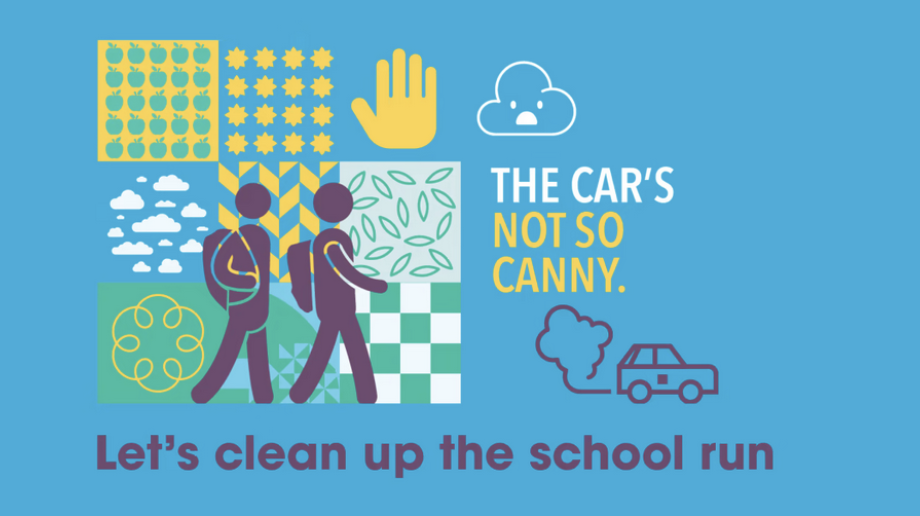
Research involving experts at Northumbria University outlines the health risks caused by harmful pollution from vehicles measured outside schools in Newcastle.
Air quality data from monitoring sites outside 12 schools in the city, covering a 24-month period, demonstrated that short-term levels of pollution, linked to patterns around school drop-off and pick-up times, would have consistently exceeded 2021 World Health Organisation (WHO) guidelines which are yet to be adopted into UK or EU policy.
Short term levels of Nitrogen Oxide (NO2) and tiny, inhalable particles called particulate matter (PM) recorded during the research were found to have exceeded 2005 and 2008 air quality guidelines and legal limits on several occasions.
The Northumbria research team of Professor Anil Namdeo, Dr Lindsay Bramwell and Dr Kamal Maji, was led by Dr Laura Keast while at Newcastle University and who is a junior doctor in public health training, and supported by Professor Judith Rankin from Newcastle University.
Their findings have now been published in the international journal of scientific studies, Atmosphere, in a paper which recommends steps to improve air quality around schools to help protect the respiratory health of children, including road closures outside schools, anti-idling campaigns, staggered drop-off and pick-up times and relocating drop-off and pick-up sites away from school entrances.
The adverse effect air pollution has on health has long been recognised, but children are among the most vulnerable due to their developing lungs and higher rate of respiration. Air pollution can cause suppressed lung growth, increased risk of asthma, wheeze and bronchitis.
Professor Namdeo, an expert in air quality management, monitoring and modelling from Northumbria University, said the respiratory health risks associated with the levels recorded demonstrated the need to act urgently to protect children in the city.
“This research confirms what we suspected in terms of the improvements needed to air quality near schools, providing a basis upon which to investigate why some schools in Newcastle experience noticeably worse ambient PM concentrations than others. We hope being able to demonstrate this variation will help to bring about change as part of discussions on the location of new schools, for example,” he explained.
Dr Bramwell, said: “The role of parents is very important in improving the current picture, with the decisions they make about whether they drive, walk or cycle to school with their children playing a big part in this. As does the availability of reliable public transport.”
Dr Keast added: “Our research provides evidence which organisations can use to plan and implement policy at both a local and national level to protect children from the harmful effects of ambient air pollution during their day at school.”
The data used in the research was collected during 2018 and 2019 and came from sensors which were installed by the Urban Observatory as part of a partnership project with Newcastle City Council on healthy schools. The Urban Observatory is a pioneering project that monitors Newcastle and Gateshead at many levels such as for temperature, air pollution and traffic. The project also involved experts from Newcastle University’s Open Lab, who developed digital learning and interactive materials based on the data on air quality collected outside schools.
The city council is consulting on and introducing measures across the city to help reduce traffic, lower pollution levels and improve road safety while also working with Newcastle’s Promise Board – a group of headteachers, school governing bodies and academy trusts from across the city – to look at ways of promoting sustainable ways of getting to school.
Read moreLatest News

24/04/2026 - 12:32
A survey by Save My Exams has found that 40% of students are regularly disrupted by noise at home.

23/04/2026 - 10:13
A survey of 1,105 teachers reveals many senior leaders reporting cuts to teaching assistants (71%), support staff (49%) and teaching staff (30%).

23/04/2026 - 09:30
A report from the Digital Poverty Alliance show that while digital tools are now embedded across school routines, access and usability remain deeply uneven.

22/04/2026 - 09:28
School food improvement programme Nourish is set to launch in Cumberland in 2026, working with schools to improve the quality and culture of food throughout the school day

21/04/2026 - 07:18
The government has announced a series of new measures aimed at strengthening freedom of speech and academic freedom across universities