New resources to help schools with vaccine discussions
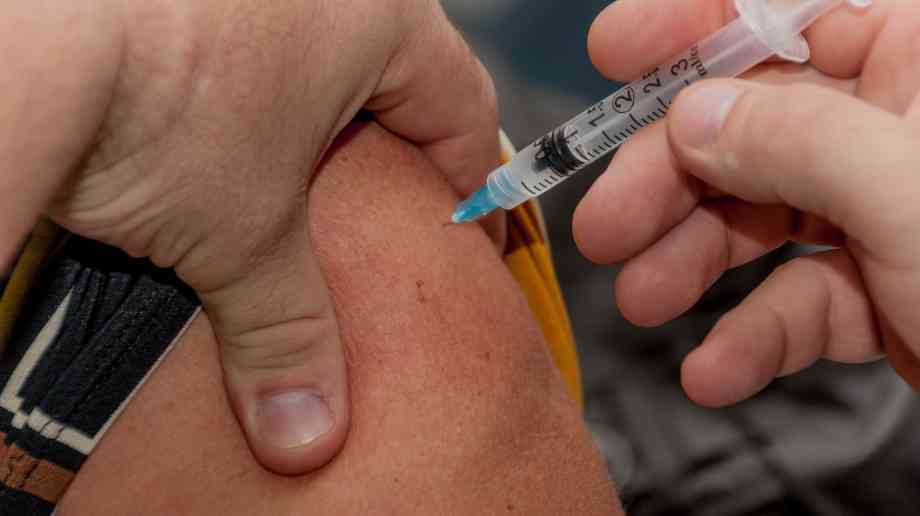
The Stephen Hawking Foundation has launched free learning tools for schools to support discussion around the topic of vaccinations.
The school assembly and lesson plan has been developed in collaboration with schools, leading research institutions and community representatives. The tools focus on the COVID vaccine and tackle conspiracy theories that have led to limited uptake in some communities.
The National Education Union has added its support to these materials and will be promoting them directly to its 450,000 members. Think-tank the Runnymede Trust is also supporting the teaching aid.
Are Vaccines Safe? provides teachers and school leaders with accurate, up-to-date scientific information on a range of frequently asked questions about the vaccination programme. It has been structured to allow school age students to engage fully in a conversation about any uncertainties or concerns they may have. Staff who lead the assembly or class are provided with additional notes and references.
The Foundation has worked with staff at Morpeth School, London, who initially devised these materials for assemblies and classrooms, as a continuation of Hawking’s belief in critical thinking and public engagement with science.
The tools have now been further developed with Queen Mary University of London and the Vaccine Confidence Project at the London School of Hygiene & Tropical Medicine (LSHTM) with the help of school-age students, teachers, scientists, science communicators and community representatives. The resources will continue to be subject to regular revision over the coming months, in order to keep pace with the science, the news agenda and the public conversation.
Are Vaccines Safe? was the brainchild of Ed Stubbs, a secondary school teacher at Morpeth School in Tower Hamlets, East London. He told us: “As a teacher previously working in inner-city Liverpool, and now in London, I have noticed students becoming increasingly fearful of vaccination. Some of my students and their families refuse their school vaccinations. I hear incorrect, and 'conspiracy' information shared in my classroom. I fear that students' real and fictional concerns increase UK vaccine hesitancy. The charged and often accusatory debate about vaccination choices can make young people feel hesitant about voicing their concerns and seeking help in debunking false information. They fear critical judgement over their doubts. I decided to create a set of unbiased resources for use in schools.”
The learning materials (PowerPoint file, Teacher's notes and PDF) can be downloaded free from the Stephen Hawking Foundation website. The public-facing link is www.stephenhawkingfoundation.org/vaccines.
Kevin Courtney, joint general secretary of the National Education Union, said: “As a former science teacher myself, I know that school is absolutely the right place for this conversation to be held. Young people have many questions about COVID and the vaccine, and this is not surprising when they themselves have been so frequently at the centre of its news coverage. These brilliant tools are accessible and robust, tackling many of the myths which can build so easily online and within communities. We are sure that our members will find them a fantastic resource.”
Dr Halima Begum, chief executive of the Runnymede Trust, said: “Young people are faced with conflicting information about vaccines at a time when we are all trying to cope with and manage a public health crisis like never before. Enabling young people to ask questions about vaccines and their efficacy, as well as build good public health and science understanding, will help with building their confidence in taking the vaccine and making an informed decision, supported by teachers.
"This will have a particularly positive effect on young people from BME groups who are often in households where their grandparents and parents rely on good advice from their children, as a result of various cultural barriers in accessing community health support.”
Lucy Hawking, chair of the Stephen Hawking Foundation's Trustees, said: "We are delighted to have the endorsement of two organisations with such strong dedication to schools and their communities. Working on these tools has been one of the most timely and impactful projects the Stephen Hawking Foundation has ever run. This is essential educational outreach at a critical time, and we greatly appreciate the efforts of everyone involved throughout its development.
"Initial feedback shows a warm reception by educators in the UK and as we hoped, is a useful and productive resource for schools to give students a chance to explore issues around vaccination through asking questions and providing accurate, scientific answers. We hope more schools, families and students will have the chance to access this resource.”
Professor Heidi Larson, director of the Vaccine Confidence Project, said: "I feel teachers are ideally placed to combat the UK’s falling vaccination rates. This programme has been carefully calibrated to include the insights of some of the leading scientists in this field but to make the information accessible to people of all ages and communities.”
Read moreLatest News

27/04/2026 - 09:45
Forty-four per cent of education professionals are unfamiliar with the Terrorism (Protection of Premises) Act 2025, otherwise known as Martyn’s Law, according to new research.

24/04/2026 - 12:32
A survey by Save My Exams has found that 40% of students are regularly disrupted by noise at home.

23/04/2026 - 10:13
A survey of 1,105 teachers reveals many senior leaders reporting cuts to teaching assistants (71%), support staff (49%) and teaching staff (30%).

23/04/2026 - 09:30
A report from the Digital Poverty Alliance show that while digital tools are now embedded across school routines, access and usability remain deeply uneven.
22/04/2026 - 09:28
School food improvement programme Nourish is set to launch in Cumberland in 2026, working with schools to improve the quality and culture of food throughout the school day