EBacc target pushed back five years

Education secretary Justine Greening has announced that the government’s plans to have 90 per cent of pupils studying all EBacc subjects by 2020 has been pushed back.
Originally the government wanted nine in 10 pupils to be studying English, maths, science, a language and either history of Geography in the next three years.
This sparked concerns that creative subjects like music and drama would be pushed out of the curriculum.
However, in response to a consultation on EBacc, Greening has stated that schools will need to meet a 75 per cent target by 2022 and 90 per cent now by 2025.
School Standards minister Nick Gibb said: "Pupils, whatever their background, have the right to study a core academic curriculum that provides them with the knowledge and skills for a variety of careers beyond the age of 16.
"As we look increasingly outwards as a country, this is more important than ever, and the EBacc ambition will ensure our pupils are able to compete with educational high performers in a global economy.
"Alongside the EBacc, the arts are a crucial part of a broad and balanced curriculum and it is great to see that the best schools ensure young people have the option to study both academic and creative subjects."
Read moreLatest News

23/04/2026 - 10:13
A survey of 1,105 teachers reveals many senior leaders reporting cuts to teaching assistants (71%), support staff (49%) and teaching staff (30%).

23/04/2026 - 09:30
A report from the Digital Poverty Alliance show that while digital tools are now embedded across school routines, access and usability remain deeply uneven.

22/04/2026 - 09:28
School food improvement programme Nourish is set to launch in Cumberland in 2026, working with schools to improve the quality and culture of food throughout the school day

21/04/2026 - 07:18
The government has announced a series of new measures aimed at strengthening freedom of speech and academic freedom across universities
20/04/2026 - 11:50
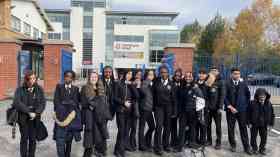
A creative careers programme which aims to inspire young people to explore careers across the creative industries has reached 210,000 young people since 2023.