

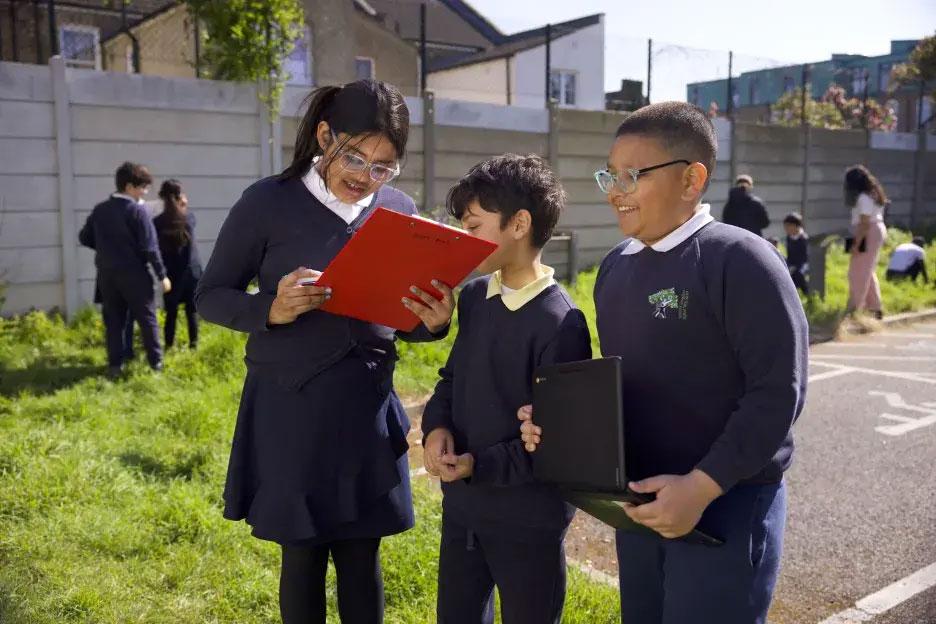
Over a quarter of all schools and colleges across England are now taking part in the free National Education Nature Park programme, which sees young people creating a network of nature-rich spaces on school sites.
The National Education Nature Park, commissioned by the Department for Education (DfE) and led by the Natural History Museum (NHM) working with the Royal Horticultural Society (RHS) and additional partners, sees young people turn their school sits from ‘grey to green’ through creating new habitats such as ponds, green walls and grasslands.
As the third academic year of the National Education Nature Park begins, data from the Natural History Museum shows that 7,500 schools, nurseries and colleges are registered. That's more than 13 million square metres of habitat mapped across the education estate and over £12 million in grants awarded to over 1,250 schools and nurseries.
The National Education Nature Park aims to empower every child and young person in England, through their place of learning, to take action to make a positive difference to both their own and nature’s future by developing a connection to nature, understanding the threats facing it and feeling able to act for nature. The project puts nature at the heart of the curriculum with resources across subject areas and key stages, with children taking part developing both green and digital skills.
Dr Jess Tipton, Head of the National Education Nature Park at the NHM said, “We’re incredibly proud of the young people and educators who have driven real change over the past two years. It’s inspiring to see over a quarter of schools nationwide now taking part, transforming their spaces however small and actively addressing biodiversity loss. This academic year, we’re aiming even higher, helping schools embed a culture where nature is at the heart of everyday learning. We’re also thrilled to be expanding the programme to include early years, with a specially adapted version that ensures the youngest learners can begin to make a positive difference to both their own and nature’s future from the very start.”