
41% of schools in areas that exceed acceptable NO2 levels
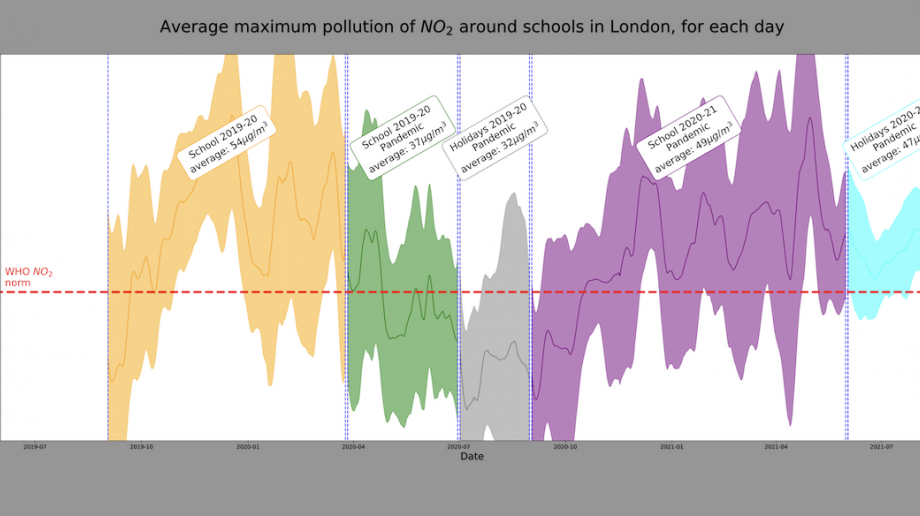
A study based on available air pollution monitoring sources shows that NO2 levels were greater than WHO acceptable levels around 41% of UK schools.
This is an improvement from 2019 when 49% of schools across the country had exceeded the norms.
Pollutants such as NO2 and PM10 affect not only health but also learning ability. Several studies from recent years prove that air pollution can harm cognitive intelligence, while other studies have proven that reducing air pollution can significantly increase the memory of young people.
The study by cleantech platform Airly also showed that children living in the poorest parts of the UK are more exposed to higher levels of air pollution. The analysis of the mean PM10 pollution (the most common pollutant measured) around schools in the United Kingdom showed that there is a relation between the PM10 concentrations and the IMD Score of the neighbourhood.
These socially deprived areas have a greater presence of air pollution for a number of factors including the concentration of older cars, dense housing populations, the lack of green urban areas, part of the industrial revolution legacy and have worse aero sanitary conditions.
In order to reduce air pollution near schools, it is first and foremost necessary to know what level of pollution there is in the vicinity of the school. To measure this, it is necessary to monitor the air quality outside, to measure the air quality in the vicinity of the facility on an ongoing basis and to analyse the pollution peaks in order to effectively influence their flattening. Airly launched the #LetSchoolsBreathe campaign earlier this year, the aim of which was to provide 50 air quality sensors to schools in the UK so that they could monitor the air quality in their surroundings on an ongoing basis. After six months, each school is to receive a report analysing the concentrations of No2 and PM at schools and suggestions on what steps to take to improve the situation.
The next step may be to reduce car traffic near the school, rearrange the paths to the school to minimise the risk of contamination for students, or also increase the amount of green space near the schools both at the front and backyard.
Latest News

24/04/2026 - 12:32
A survey by Save My Exams has found that 40% of students are regularly disrupted by noise at home.

23/04/2026 - 10:13
A survey of 1,105 teachers reveals many senior leaders reporting cuts to teaching assistants (71%), support staff (49%) and teaching staff (30%).

23/04/2026 - 09:30
A report from the Digital Poverty Alliance show that while digital tools are now embedded across school routines, access and usability remain deeply uneven.

22/04/2026 - 09:28
School food improvement programme Nourish is set to launch in Cumberland in 2026, working with schools to improve the quality and culture of food throughout the school day

21/04/2026 - 07:18
The government has announced a series of new measures aimed at strengthening freedom of speech and academic freedom across universities