

As schools look ahead to 2026, turning climate ambition into practical action has never been more important. Drawing on real-world examples from the Let’s Go Zero campaign, this article shares simple, proven steps schools can take to cut energy use, save money and embed sustainability across their whole community
The New Year is a great time to power up climate action at your school – or take your first steps towards greater sustainability.
Let’s Go Zero is Ashden’s campaign for all schools, colleges and nurseries to be zero carbon by 2030. With support from us, many of these schools have made significant progress across their priority areas – which range from cutting energy bills, to securing funding for great green spaces.
Whatever impact they’ve achieved, these schools all started with a clear, practical Climate Action Plan that enabled them to turn ambition into action. If your school is ready to create or strengthen its plan, why not get free advice and inspiration from Let’s Go Zero? This could include tailored support from your own Climate Action Advisor. You’ll be in good company – over one in four UK schools have now joined the campaign.
Energy: small changes, big savings
Low-cost, high impact changes will make sure your school community is motivated and invested in climate action. That was the case at Kilburn Grange Primary School in London.
The school was keen to tackle high gas use – which their Climate Action Advisor calculated was its largest source of emissions. Kilburn Grange’s story shows how examining your carbon footprint is a great first step for any school.
By understanding when energy use peaked during the day, Kilburn Grange made targeted behaviour changes and small adjustments to its Building Management System (BMS), cutting energy use by 35 per cent. Its Display Energy Certificate (DEC), the measure of a building’s energy performance, improved from G to B.
At Whitefriars School in Harrow, our advisor suggested that staff begin monitoring energy use after they raised concerns about high bills. Using Energy Sparks (a school-specific energy management tool) Whitefriars identified a common, but often overlooked, problem: high electricity usage over weekends and school holidays.
Once the school’s site manager began actively monitoring the data and addressing unnecessary out-of-hours usage, consumption over the holidays fell by 43 per cent, contributing to significant overall reductions.
If Whitefriars keeps up its new approach, it projected to save £12,000 over the year.
Sharing this progress across the school proved critical. The data was a practical teaching tool for students, and incentivised behaviour change such as switching off lights in empty classrooms. What began as a cost-saving exercise has since gathered momentum: sustainability is now embedded in the school’s culture, with action snowballing across other initiatives through their Climate Action Plan.
Looking for one straightforward change? Here are some ideas
Firstly, power down over the holidays. If you’re not currently monitoring your holiday energy usage, it is very likely there are savings to be made here. The most effective approach is creating an end of term switch off checklist: Energy Sparks have a great one you can download to get started.
Then tweak your temperature, one degree at a time. It’s common for thermostats to be set at a higher temperature than what students and staff need to be comfortable. A 1C reduction can lower your heating costs by up to 10 per cent.
Schools can sign up to Let’s Go Zero. Our advisors and resources can help you tackle energy use, a critical issue for any school.
A whole school approach
For Little Heath School in Reading, having the whole school onboard was critical to their success. Many schools have a passionate sustainability lead, but it is much easier for them to implement long-lasting change with staff and students supporting change too.
Recent ‘switch-off campaigns’ have seen Little Heath cut electricity consumption by 19 per cent, and gas by 69 per cent (factoring in changes to outside temperature). Emma Saunders, their sustainability lead, attributes these impressive results to bringing on board a whole team: “Our Climate Action Plan has been really good to help the senior leadership team focus on sustainability, which was missing before. That’s been the change…looking at the data, which we weren’t able to see before, and sharing that with staff has been eye opening for everyone.”
A standout success of their whole school approach has been their departmental power-downs. Recognising that departments know their own buildings best, Emma gave the school’s heads of department responsibility for switch-offs over weekends and holidays. Staff have seen thousands of pounds saved for re-investment elsewhere in the school. As a result, uptake has been strong, with all heads responding promptly to Emma’s pre-holiday email reminders.
Stuart Lonsdale, premises manager reflected: “Our previous bills have been eye watering. Now it’s out to a wider variety of staff, we’re able to make a real change. Staff are pleased we’re reducing our carbon footprint, but what’s really motivated us are the cost savings, which have transformed how staff and students take part.”
Little Heath School shares the following top tips. Firstly, direct early-starting staff to one block which has been heated earlier than the rest of the building.
Secondly, shut down all heating and hot water during the holidays, leaving just frost protection on. Staff who go into Little Heath during the holidays use individual heaters, such as plug in radiators.
Finally, keep communicating. Little Heath raises energy-saving in weekly staff briefings, and feeds back positive progress updates to staff and students.
Step outside the classroom
We all know sustainability is so much more than energy bills and carbon emissions. What’s more, the latest government Curriculum and Assessment Review has reaffirmed the importance of climate education, recommending access to nature as a crucial element of learning. So now is the time to expand your sustainability approach beyond buildings.
For many schools, nature-based action is where climate work really comes to life. One great example is Downsview Primary School in Croydon. As a Let’s Go Zero school, they were able to enter the annual OVO Nature Prize. The competition offers schools grants for bold and inclusive green projects.
Downsview used their prize to transform a what their Sustainability Lead described as a “grass desert” into a Serenity Garden: a biodiverse sensory space used daily by pupils. Staff say this had led to reduced screen time and better mental health for students. There are unique learning opportunities too: pupils saw how introducing ladybirds to broad bean plants fixed their blackfly problem – a teachable moment you can’t replicate in the classroom.
At Downsview, outdoor learning has sparked interest in sustainable careers, strengthened relationships with families through community gardening days, and created a calm space that benefits wellbeing as much as learning. The impact has been “absolutely amazing”, according to one parent.
Green spaces have also been a priority at William Morris School. Before becoming a Let’s Go Zero school, they were involved in lots of different awards and initiatives. Although engaging in these schemes has been beneficial for this school, their Climate Action Plan gave them clarity and direction. Their sustainability lead described their plan as a way to accept that “you can’t work on everything” and instead encouraged them to prioritise a few key areas each year. Last year, the OVO Nature Prize enabled them to focus on food waste and growing, with a new greenhouse becoming both a learning resource and a wellbeing space.
Both schools’ experiences show how funding and structure are needed to turn ideas into reality. As William Morris’ headteacher explained, “we wouldn’t have naturally had funds or grants [for this work], so having this additional funding has made this possible.”
Just as important is having a team and a shared plan in place. At William Morris, starting with a student eco team and using the curriculum as an anchor helped the school’s sustainability efforts snowball. Whether they related to waste or water, energy or food, activities were all framed as meaningful learning opportunities. The Climate Action Plan then helped staff check progress and maintain momentum over time.
Whatever your school’s priorities, you can take action that benefits students, staff and the wider community. Ready to go? Joining Let’s Go Zero will connect you with resources and support, as well as great opportunities like the OVO Nature Prize.
Sign up at Letsgozero.org/join
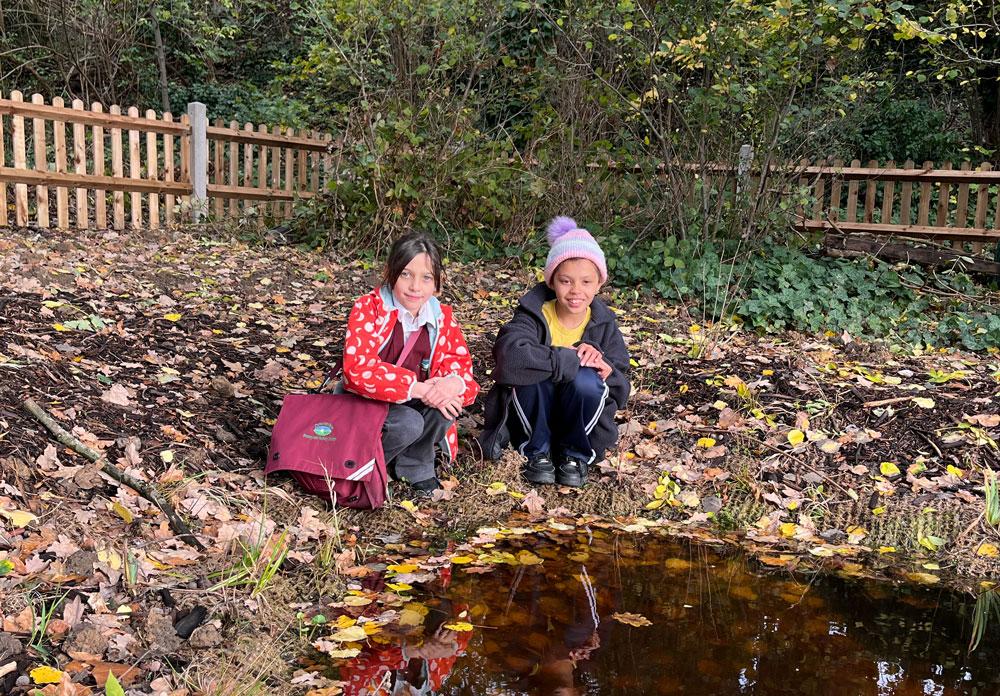
Image shows Downsview Primary School in Croydon, London.